

 Ελληνικά

alpha-Arbutin
Price range: € 19,50 through € 47,50
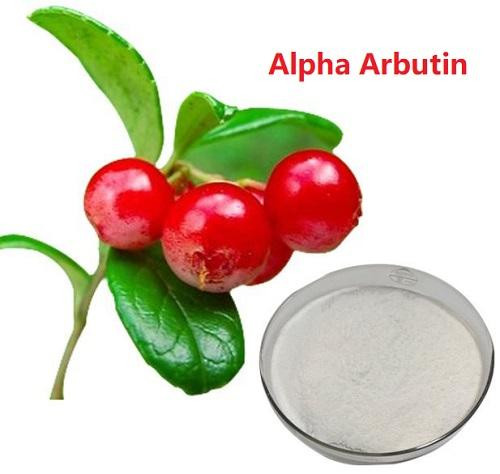
alpha-Arbutin is a potent tyrosinase inhibitor used in the cosmetic and pharmaceutical industries for its skin lightening effects, treatment of hyperpigmentation, and as a safer alternative to hydroquinone
alpha-Arbutin is a phenol glucoside found in high concentrations in bearberry (Arctostaphylos urva ursi) leaves
Essential for the production of melanin is the amino acid tyrosine. The rate-limiting step in melanogenesis is the conversion of L-tyrosine to melanin, via the action of tyrosinase. Copper and oxygen act as catalysts. The conversion of tyrosine to melanin is catalyzed by the enzyme tyrosinase. Tyrosinase inhibitors such as arbutin act during melanin synthesis and may interfere with the production and action of tyrosinase.
alpha-Arbutin is a potent tyrosinase inhibitor, meaning it can reduce melanin production in the skin by inhibiting the enzyme tyrosinase, which is crucial for melanin synthesis. This mechanism makes it effective in skin-lightening and treating hyperpigmentation disorders.
- Tyrosinase Inhibition:
Alpha arbutin works by directly inhibiting tyrosinase, the enzyme responsible for catalyzing the first two steps in melanin production.
- Competitive Inhibition:
It acts as a competitive inhibitor, meaning it binds to the same active site on the tyrosinase enzyme as tyrosine, the natural substrate, effectively blocking the production of melanin.
- Skin-Lightening:
By reducing melanin synthesis, alpha arbutin can lighten skin tone and reduce the appearance of hyperpigmentation, such as freckles, sunspots, and melasma.
- Compared to β-Arbutin:
Alpha arbutin is a more effective tyrosinase inhibitor than its isomer, beta-arbutin.
- Stability and Safety:
While alpha arbutin is naturally unstable and can release hydroquinone, a compound that can be toxic in high concentrations, it’s often formulated with other ingredients to enhance its stability and efficacy.
It is used in the cosmetic and pharmaceutical industries for its skin lightening effects, treatment of hyperpigmentation, and as a safer alternative to hydroquinone.
Only logged in customers who have purchased this product may leave a review.
Related products


Reviews
There are no reviews yet.